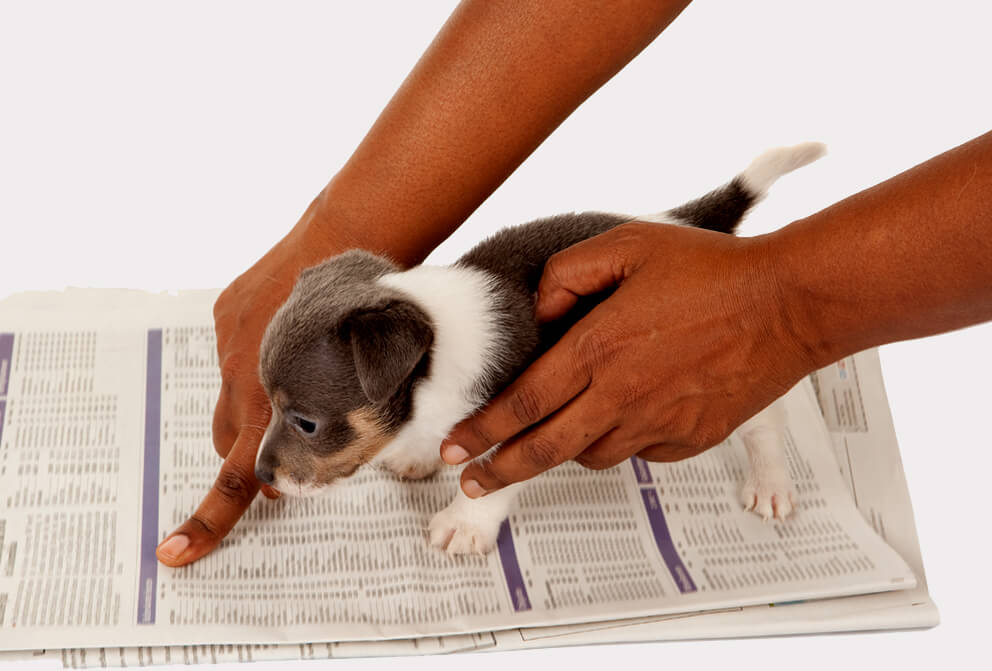
Most pit bull puppies are mostly potty trained in 4 to 6 months, with full reliability taking up to a year. The method is simple, but it is not fast: a consistent schedule, a crate, and praise for going in the right place.
The mistake most owners make is treating accidents as defiance. They are almost always a schedule problem: a puppy that has an accident did not fail a test. The schedule failed the puppy.
If you want a step-by-step walkthrough to go with this article, the free TrainPetDog potty training guide covers the same method in more detail.
How long it takes, honestly
Every puppy is different, but the timeline is fairly consistent across breeds. Here is what to expect.
| Age | What is realistic |
|---|---|
| 8–12 weeks | Many trips outside every day. Accidents are normal and frequent. |
| 3–4 months | The puppy starts to understand the routine and may signal before going. Accidents still happen, especially after play. |
| 4–6 months | Mostly trained. The puppy holds it longer and signals more reliably. |
| 6–12 months | Full reliability. The puppy can hold it for hours and will usually ask to go out. |
Regression around 6 to 7 months is normal. Teething, a move, a change in routine, or a new person or pet can set a puppy back a few weeks. It is not a failure. Go back to the basics for a week or two and the puppy will catch up.
A trained puppy that suddenly starts having accidents again after months of success is a different story: it can be a urinary tract infection, and it is worth a vet visit.
The schedule that works
Potty training runs on a schedule, not on the puppy’s willpower. The rule that matters most is age in months plus one: a puppy can hold it for about its age in months plus one hour. An 8-week-old needs to go out every 1 to 2 hours while awake. A 3-month-old can manage about 4 hours, and a 6-month-old about 7, though you should not test the limit during the day.
Take the puppy out at the same times every day: first thing in the morning, after every meal, after every nap, after play, and last thing at night. A day for an 8-week-old puppy looks like this: out at 6:00 a.m., breakfast then out at 6:30, out at 8:00 and 10:00, lunch then out at noon, out at 2:00 and 4:00, dinner then out at 6:00, out at 8:00, and a last trip out at 10:00 p.m.
A 30-minute timer after coming inside helps in the early weeks: puppies often need to go again shortly after a trip out.
Reading your puppy
Most puppies signal before they go.
- Sniffing the ground in circles
- Circling in one spot
- Squatting
- Restlessness
- Whining or pacing near the door
When you see a signal, take the puppy out immediately. The gap between the signal and the accident is short.
Teach a potty word while you are at it. Say “go potty” calmly while the puppy is going, then praise and give a small treat the moment it finishes. After a week or two, the word becomes a cue you can use on walks or before a car ride. Bully sticks make a good reward, since they last longer than a biscuit.
Crate training done right
The crate is the single most useful potty training tool you have, because dogs do not like to soil where they sleep. A puppy that is crated correctly will hold it and wait to be let out, which is the habit you are trying to build.
Size the crate so the puppy can stand up, turn around, and lie down comfortably, and no bigger. If the crate is too large, the puppy will soil one corner and sleep in the other, which defeats the purpose. A divider panel solves this: one crate that grows with the puppy. Buying a puppy-sized crate first and an adult-sized crate later also works, but a divider is cheaper and simpler.
Keep the crate near your bed at night, especially in the first weeks, so the puppy can wake you when it needs to go out. Wake the puppy after naps too: a puppy that wakes up needs to go out within a minute or two.
Two rules for the crate. First, never use it as punishment: the crate has to be a safe, comfortable place, or the puppy will resist going in and will not settle. Second, do not leave a young puppy crated for longer than it can hold it. The age-in-months-plus-one rule is your limit during the day. Crate training is best for pit bull puppies, and it is essential if your pit bull is alone often.
Wee-wee pads: start here, then transition
Pads are fine to start with, and they make sense in some situations: apartments, bad weather, overnight, or a puppy too young to have finished its vaccinations. Put the pads in a separate area from the puppy’s food and sleeping spot, since dogs naturally keep those areas clean.
Pads will not work once the puppy is older and larger. A grown pit bull produces more than a pad can handle, and a pad-trained dog has learned that going inside is acceptable.
Once the puppy starts to recognize its cues, move the pads closer to the door a little at a time, then outside the door, then away entirely, while you take the puppy out on the schedule. Most puppies make the switch in a week or two if the outdoor routine is already in place. Paper training can slow outdoor training down, because the puppy has to unlearn “inside is fine” before it learns “outside is the place,” so do not stay on pads longer than you need to.
Apartment potty training
Apartment living adds one problem: the trip outside takes time. An elevator ride, a hallway, and a lobby can be five minutes between the puppy’s signal and the grass.
A few things help. Carry the puppy down while it is still small enough, so it does not have an accident in the hall or the elevator. Build extra buffer time into the schedule, and take the puppy out before you think it needs to go, not after. A balcony grass patch, a real grass or artificial turf tray, gives you a backup spot for the middle of the night or bad weather. It is not a replacement for outdoor training, but it saves the carpet while the puppy is learning.
Accidents: what to do and what never to do
Accidents will happen. What you do next matters more than the accident.
Never punish the puppy, and never rub its nose in it. Punishment after the fact does not teach the puppy anything, because the puppy cannot connect a punishment now with something it did minutes ago. What it does teach the puppy is to hide from you when it needs to go, which means accidents in corners and behind furniture. That is the opposite of what you want.
When an accident happens, take the puppy outside immediately, calmly, without a fuss, and praise it if the puppy finishes outside. Then clean the spot fully with an enzymatic cleaner, the kind made for pet accidents, which breaks down the smell instead of covering it up. Angry Orange is the cleaner linked in the original post. Avoid harsh chemicals in the crate, and avoid scented cover-ups that leave the smell underneath for the puppy to find later.
Troubleshooting
Regression at 6 to 7 months. Normal. Teething, a move, a new schedule, or a new pet can set a puppy back. Go back to the schedule and the crate for a week or two.
Accidents only when alone. Usually too much freedom too soon, or separation anxiety. Shrink the puppy’s space with a gate, go back to the crate for alone time, and build up alone time gradually.
Peeing when excited or greeting people. Excitement urination is common in puppies and usually fades as the puppy matures. Keep greetings calm and low-key: no high voice, no big fuss. Let the puppy settle, then greet it.
A trained puppy that suddenly regresses. If a reliably trained puppy starts having accidents again, especially with straining, frequent small trips out, or blood in the urine, see a veterinarian. A urinary tract infection is the most common cause, and it needs treatment.
Adult and rescue pit bulls
The same method works for an adult or rescue pit bull, and it usually works faster. An adult dog has better bladder control than a puppy, so the schedule is easier to keep. What an adult rescue may not have is a history: it may never have lived in a house, or may have learned bad habits in a previous home.
Start with a schedule from day one, exactly as you would with a puppy, and expect a few weeks of learning the house rules. Be patient with accidents: the dog is not being stubborn, it is learning a new routine in a new place. Crate training is possible for an older pit bull, though it will most likely be more difficult than with a puppy.
Frequently asked questions
How long does it take to potty train a pit bull puppy? Most puppies are mostly trained in 4 to 6 months, with full reliability up to a year.
How often should I take my puppy out? An 8-week-old needs to go out every 1 to 2 hours while awake. Use the age-in-months-plus-one rule as the puppy grows.
Should I use pee pads or go straight outside? Pads are fine to start, especially in an apartment, but plan to transition to outside.
What size crate do I need? Big enough for the puppy to stand up, turn around, and lie down, and no bigger.
How do I potty train at night? Keep the crate near your bed, take the puppy out last thing before bed, and restrict water about 2 hours before bedtime.
Is regression normal? Yes. Regression around 6 to 7 months is common and usually passes in a week or two of going back to the basics. A sudden regression in a trained puppy can mean a medical issue, so see a vet.
If you want the full step-by-step method with a training plan, the free TrainPetDog course covers crate and house training in detail. Get the free course here.
This article is general information, not veterinary advice. If a trained puppy suddenly regresses or strains to urinate, talk to your veterinarian.